Selling a home generally follows 10 major steps: meet with a real estate agent, create a selling plan, prepare the listing paperwork, get the home ready for market, list and market the property, review offers, move under contract, work through inspections and repairs, prepare for closing, and complete the sale.
Every transaction is different, but understanding what happens at each stage can make the home selling process much easier to navigate.
At The Ginther Group, we also believe the process should begin before the house ever goes on the market. For our sellers, that means first understanding the property, the seller’s goals, the condition of the home, the likely pricing strategy, and what needs to happen before listing.
If you’re selling specifically in Winston-Salem, our complete guide to selling a home in Winston-Salem goes deeper into local selling considerations and strategy. This guide focuses on the step-by-step process of selling a house from beginning to end.
Step 1: Meet With a Real Estate Agent

The home selling process should begin with a conversation about more than simply what your house might be worth.
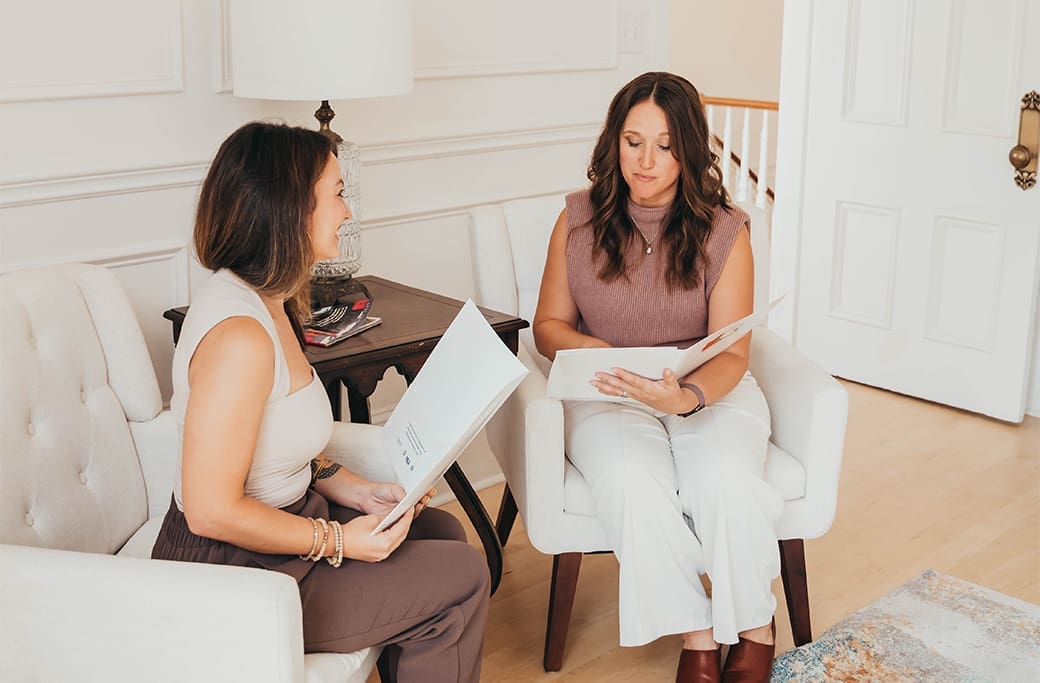
At The Ginther Group, the seller consultation is typically conducted at the home, so the agent can walk through the property with the owner and better understand:
-
- The home’s current condition
- Repairs or improvements that may be worth considering
- The seller’s goals and preferred outcome
- Timing for the move
- Pricing considerations
- Marketing expectations
- Questions or concerns about selling
The Ginther Group approaches the seller relationship as a partnership. Your agent brings market knowledge, strategy, marketing, negotiation, and transaction experience to the process, while you bring important knowledge about the property, your priorities, and the outcome you’re trying to achieve. Establishing those expectations early helps both sides work toward the same goal.
This is also an opportunity to consider whether selling now is actually the best option. Depending on your circumstances, you may want to compare selling with other possibilities, such as holding the property, renting it, or making improvements before putting it on the market.
For homeowners who have improvements they’d like to make before selling, but don’t want to pay for them upfront, The Ginther Group also offers a Renovate Now, Pay at Closing option for qualifying projects.
The purpose of this first step isn’t to pressure you into listing. It’s to develop a clearer picture of the property, your options, and the path that makes the most sense for you.
Step 2: Develop Your Pricing and Marketing Plan
Once you decide that selling is the right move, the next step is developing a plan.
That begins with understanding your home’s likely market value.
Your agent can prepare a Comparative Market Analysis using information such as:
-
- Recent sales of comparable properties
- Competing homes currently for sale
- Local real estate comps
- Location
- Square footage and layout
- Property condition
- Updates and features
- Current buyer demand
- Trends in the local market
From there, you can discuss an asking-price strategy and how the home will be positioned once it reaches the market. Setting a competitive price matters because an asking price that is out of step with the market can discourage potential buyers.
Market value and asking price aren’t necessarily the same thing. Market value reflects what buyers are likely to pay based on the property and market conditions, while asking price is a strategic decision about how the property will enter the market.
See our deeper explanation of market value vs. asking price for Winston-Salem sellers.
An important part of the plan is also recognizing which parts of the sale you can influence and which you can’t. Sellers can make decisions about issues such as preparation, condition, pricing strategy, and how accessible the property is for showings. You can’t control competing homes, broader market conditions, or exactly when the right buyer will appear.
A good selling strategy focuses on making strong decisions about the factors you can influence while responding realistically to the factors you can’t.
Your plan should also establish expectations for the listing period: how the property will be marketed, how activity will be evaluated, how you’ll communicate with your agent, and when a change in strategy might deserve discussion.
Step 3: Complete the Listing Process
Before the home can go on the market, you’ll formally establish the working relationship with your real estate brokerage and complete the necessary listing information and paperwork.
At The Ginther Group, this includes gathering detailed information about the property and reviewing the listing documents with the seller. This is an important step because accurate information at the beginning helps the listing, marketing, showings, and transaction move more smoothly later. Your agent should also make sure you understand the major terms of your listing relationship and give you an opportunity to ask questions before you sign.
Real estate agreements and compensation practices can change, so sellers should review their current documents and discuss questions about legal rights or contractual terms with the appropriate professional rather than relying on older online explanations.
Step 4: Prepare Your Home for the Market
With the plan in place, the focus turns to getting the property ready to be seen by buyers. Preparation doesn’t automatically mean undertaking major renovations. In many cases, targeted cosmetic updates and home improvements may make more sense than taking on extensive projects before selling.
Depending on the home, useful preparation might include:
-
- Decluttering
- Removing excess personal items
- Deep cleaning, including areas buyers are likely to notice
- Touching up or refreshing paint where appropriate
- Addressing obvious maintenance issues
- Improving curb appeal
- Rearranging or staging furniture for better space and flow, including removing excess furniture when needed
- Making selected repairs
- Improving lighting and presentation
The goal is to remove unnecessary distractions and help potential buyers see the home at its best.
For The Ginther Group sellers, this pre-listing stage also includes coordinating practical details such as professional photography, property measurements, access for showings, and installation of the for-sale sign before the home launches.
Those operational details may seem small, but they are part of what turns a property from “a house we’re thinking about selling” into a properly prepared listing.
Step 5: List, Market, and Show the Home

Once the property is ready, it goes on the market and potential buyers can begin discovering it through the MLS, online marketing, agent networks, and other channels.
Depending on the property and marketing strategy, exposure can include:
-
- Professional listing photography
- Placement in the Multiple Listing Service (MLS)
- Online real estate platforms
- Detailed property descriptions
- Virtual tours when appropriate
- Social media
- Digital marketing
- Agent-to-agent exposure
- Open houses when appropriate
- Direct promotion to potential buyers
At The Ginther Group, that marketing is intentionally multifaceted. TGG’s approach combines professional photography with print and digital promotion, social media, and collaboration with other local real estate professionals and companies. An in-house marketing specialist also helps present each property to the public rather than leaving the marketing of the listing entirely to the individual agent.
The objective is not simply to generate the largest possible number of views. It’s to put the property in front of buyers who may realistically purchase it.
Learn more about why exposure matters when selling a home.
Pay Attention to What the Market Is Telling You
Once showings begin, activity and feedback provide information. Repeated comments about price, condition, presentation, or a particular feature may reveal how buyers are perceiving the home in the current market. That doesn’t mean sellers should react to every individual comment or automatically reduce the price after a predetermined number of days.
Instead, your agent should evaluate the larger picture:
-
- How many buyers are viewing the property?
- Are comparable homes receiving offers?
- Are buyers repeatedly raising the same concern?
- Have local market conditions or competing listings changed?
- Is the current pricing and marketing strategy producing the expected response?
The first several weeks can be particularly informative. Our guide to the first 30 days on the market in Winston-Salem explains how sellers can evaluate that period.
Step 6: Review and Negotiate Offers

When multiple offers arrive, your listing agent can help you review offers side by side. The highest bid isn’t automatically the strongest offer; purchase price, financing, due diligence terms, timing, and other terms all matter.
Depending on the offer, important terms can include:
-
- Price
- Financing
- Proposed closing date
- Due diligence terms
- Earnest money
- Seller concessions
- Requested personal property
- Other contractual conditions
A seller may accept an offer, reject it, or negotiate different terms through a counteroffer. The strongest offer isn’t always automatically the one with the highest price. If you’re comparing multiple offers, financing, contingencies, timing, and other terms can all affect the strength of the overall proposal. Those terms can affect both the likelihood of successfully reaching closing and the seller’s overall proceeds and timing.
If an offer arrives early, don’t assume you should automatically reject it in hopes of something better. See Should You Accept the First Offer on Your House in Winston-Salem? for a closer look at that decision.
Once the parties have reached an agreement and the required purchase agreement has been properly completed, the transaction moves into the next stage.
Step 7: Go Under Contract and Through Due Diligence
An accepted contract is not the end of the home selling process.
In North Carolina transactions using the commonly used Offer to Purchase and Contract, the buyer and seller may agree to a due diligence period. The sales contract establishes the agreed terms and contract timeline, including the due diligence period and other important deadlines.
That investigation may include matters such as:
-
- Home inspections
- Pest inspections
- Septic or well evaluations when applicable
- Surveys
- Financing
- Appraisal
- Title research
- Contractor estimates
- Other property-specific investigations
The length and terms of the due diligence period are negotiated as part of the contract. North Carolina contracts may also include a negotiated due diligence fee. When one is used, its amount and other relevant terms depend on the particular contract.
For a fuller explanation, see our guide to the due diligence period in North Carolina real estate.
Step 8: Work Through Inspections, Requests, and Repairs
Home inspections often lead to one of the most misunderstood parts of selling a house. An inspection report may identify everything from ordinary maintenance to larger concerns. But an inspection does not automatically mean a seller must fix everything the buyer identifies. In North Carolina, repair requests are negotiable.
A buyer may ask the seller to:
-
- Complete certain repairs
- Provide a financial concession or credit where appropriate
- Adjust another term of the transaction
- Provide additional information
The seller can then consider those requests with the listing agent and determine how to respond.
At The Ginther Group, when repair requests arise, the seller’s agent can help the homeowner understand the request, consider estimates when useful, and evaluate the issue in the context of the entire transaction rather than treating every item as an isolated demand.
If repairs are ultimately agreed upon, the contract and agreement between the parties determine what must be completed and when. This stage is one reason seller representation continues to matter after an offer is accepted.
Step 9: Prepare for Closing
Once due diligence and any repair negotiations have been addressed, the transaction moves toward closing.
For TGG sellers, the transaction team helps coordinate the practical information needed for this stage. That may include gathering seller information requested by the closing attorney, coordinating agreed-upon repairs, discussing how the seller wants to receive proceeds, and making sure necessary transaction details are moving forward.
The seller should also prepare the property itself for the final stage of the home sale by:
-
- Completing agreed-upon work
- Removing remaining personal belongings
- Gathering keys, remotes, and other property items
- Following any contractual requirements regarding the home’s condition
- Preparing for the buyer’s final walkthrough
How Closing Works in North Carolina
North Carolina residential real estate closings involve legal work performed by a North Carolina-licensed attorney. The closing process also involves legal and financial steps beyond the signing itself.
The closing attorney’s responsibilities can include title work, preparation and review of legal documents, recordation, and disbursement of funds when the legal requirements for closing have been satisfied.
Sellers should rely on the closing attorney for legal questions regarding documents, title, signing, recording, or distribution of proceeds.
Our North Carolina home closing guide for sellers goes deeper into the period between accepting an offer and completing the transaction.
Step 10: Complete the Sale and Know Who to Call Afterward

Closing completes the legal transfer of the property, but The Ginther Group doesn’t view it as the point where the client relationship ends. One of the distinctive parts of The Ginther Group’s seller process is its “Clients for Life” philosophy.
After a sale, homeowners may still need recommendations for contractors, landscapers, handymen, local services, or help with another real estate question. The Ginther Group’s approach is to remain a resource after the transaction rather than treating someone as simply a former client once the closing is complete.
For the seller, however, closing marks the end of the home selling process itself and the beginning of the next chapter.
The journey has moved from:
consultation → planning → preparing → listing → marketing → offers → due diligence → repairs → closing.
Understanding that sequence ahead of time can make every individual decision feel much more manageable.
Selling a Home Is a Process, Not a Single Event
Putting a home on the market is only one part of the home selling process.
A successful sale involves decisions before the listing launches, strategy while the property is active, careful evaluation when offers arrive, continued representation while the transaction is under contract, and coordination all the way through closing.
That’s why understanding the steps to selling a house before you begin can be so valuable.
If you’re selling in Winston-Salem or elsewhere in the Triad, you can continue with our complete guide to selling your home in Winston-Salem for deeper local guidance.
Thinking About Selling Your Home?
The first step doesn’t have to be putting a sign in the yard.
The Ginther Group starts by learning about your home, your goals, your preferred timing, and the outcome you’re trying to achieve. From there, we can help you evaluate the property, develop a pricing and marketing strategy, prepare for the market, negotiate offers, and navigate the transaction through closing.
Contact The Ginther Group to schedule a seller consultation and talk through what your next step should be.