

Choosing a neighborhood in High Point is about more than finding a house you like. Different parts of the city offer different combinations of home styles, lot sizes, commute routes, nearby amenities and access to other areas of the Piedmont Triad.
There is no single High Point neighborhood that is best for every buyer. The right place depends on what you value most and how you rank price, location, size and condition.
This guide introduces several High Point neighborhoods and explains what buyers should investigate before deciding where to focus their home search. If you are still evaluating the city as a whole, begin with our Living in High Point, NC: Complete Relocation Guide, then return here to compare individual areas.
Our guide to what to look for in a neighborhood when shopping for a home offers additional questions to consider as you compare locations.
Understanding High Point’s Neighborhoods

High Point contains historic residential districts, established suburban neighborhoods, golf-course communities, areas near High Point University and locations with convenient access to Greensboro, Winston-Salem, and other parts of the Triad.
The differences are not limited to architectural style.
Two homes with similar prices and square footage may offer very different experiences because of:
-
- The street and surrounding properties
- Distance from work and everyday destinations
- Traffic on nearby roads
- Lot size and spacing between homes
- Home age and renovation history
- Access to parks, shopping and recreation
- Planned development or road construction
- Homeowners association requirements
Instead of beginning with a generic ranking of the “best” neighborhoods, start with the type of home and location you want.
Emerywood
Emerywood is one of High Point’s best-known historic residential areas. Buyers will find tree-lined streets and a varied collection of older homes, including properties with architectural details that are difficult to reproduce in newer construction.
Its central location can appeal to buyers who want to remain close to downtown High Point, local businesses, restaurants and community destinations.
As with any historic neighborhood, buyers should evaluate more than appearance. The condition and renovation history of an older home can matter considerably. Roofing, wiring, plumbing, drainage, windows and previous additions should all be reviewed carefully during the inspection and due-diligence process.
Emerywood may be worth exploring if you prioritize historic character and a central High Point location.
Johnson Street Historic District
The Johnson Street Historic District offers another option for buyers interested in older architecture and established residential surroundings.
Homes and streets vary throughout the district, so buyers should tour the area rather than forming an opinion from a single listing. Look at the home’s immediate block, nearby land uses, and the routes you would take to work, school, shopping or other regular destinations.
When considering a property in or near a historic district, investigate whether local guidelines, deed restrictions, or other requirements may affect future exterior changes. The rules applicable to one property may not necessarily apply to another.
Neighborhoods Near High Point University

An aerial view of High Point University and the surrounding residential neighborhoods in High Point, NC.
Buyers who want to live near High Point University can explore several residential areas surrounding the campus. Housing, street character, and proximity to university facilities vary, so buyers should evaluate the individual property and its immediate surroundings.
High Point University is surrounded by several established residential areas, giving buyers options within a short drive of campus. Homes, lot sizes and street character vary considerably depending on which side of the university you explore.
Proximity to the university may appeal to faculty, staff, students’ families, investors and other buyers who want convenient access to campus and northern High Point. However, buyers should evaluate each property individually. Consider traffic during university events, walking and driving routes, nearby development, parking conditions, and the property’s distance from the specific part of campus you expect to visit.
Neighborhood names and boundaries around the university are not always used consistently, so verify the property’s address rather than relying only on a listing’s neighborhood label. Visit the area at different times of day and drive the routes you would regularly use before deciding whether the location works for you.
Oakview
Oakview is an established part of northwest High Point with a mix of home styles and mature residential streets.
Its location can be useful for buyers who want access to northern High Point amenities or routes leading toward other parts of the Triad. However, convenience should be evaluated using the destinations that matter to you, not simply by looking at mileage on a map.
Drive prospective routes during the times you would normally use them. A home may appear close to work or shopping while still requiring a very different daily drive because of the streets, intersections and traffic patterns involved.
Deep River
Deep River and the surrounding northern High Point area offer a more suburban residential setting with access to major routes, shopping and destinations around north High Point.
Since “Deep River” may be used to describe a broader area, as well as particular residential communities, buyers should pay close attention to the actual property address and immediate surroundings.
Consider:
-
- Which roads provide access to the property
- Traffic at commuting times
- Distance to grocery stores and other routine destinations
- The home’s proximity to commercial development
- Lot drainage and surrounding topography
- Any homeowners association requirements
The individual property and street matter more than the neighborhood name alone.
Willow Creek
Willow Creek is associated with golf-course and planned-community living. Buyers considering the area may be looking for established landscaping, community amenities or a particular style of residential development.
Before purchasing in any planned or golf-course community, review:
-
- Homeowners association dues
- Covenants and restrictions
- Architectural rules
- Amenity access
- Maintenance responsibilities
- Any planned assessments
- The location of the lot relative to the course, roads and shared facilities
A community’s amenities can be valuable, but buyers should understand the ongoing costs and rules attached to them.
Uptowne and Central High Point
Buyers who want to be closer to central High Point may also consider neighborhoods and residential options around Uptowne and the city’s central districts.
This part of High Point can provide convenient access to local businesses, cultural destinations and community events. Housing options and immediate surroundings vary, however, so buyers should investigate each property individually.
If walkability or proximity to a particular destination matters to you, test the route in person. A property described as being “near” Uptowne may not necessarily provide the experience you expect from the listing description alone.
Moffitt Heights and the Oak Hollow Area
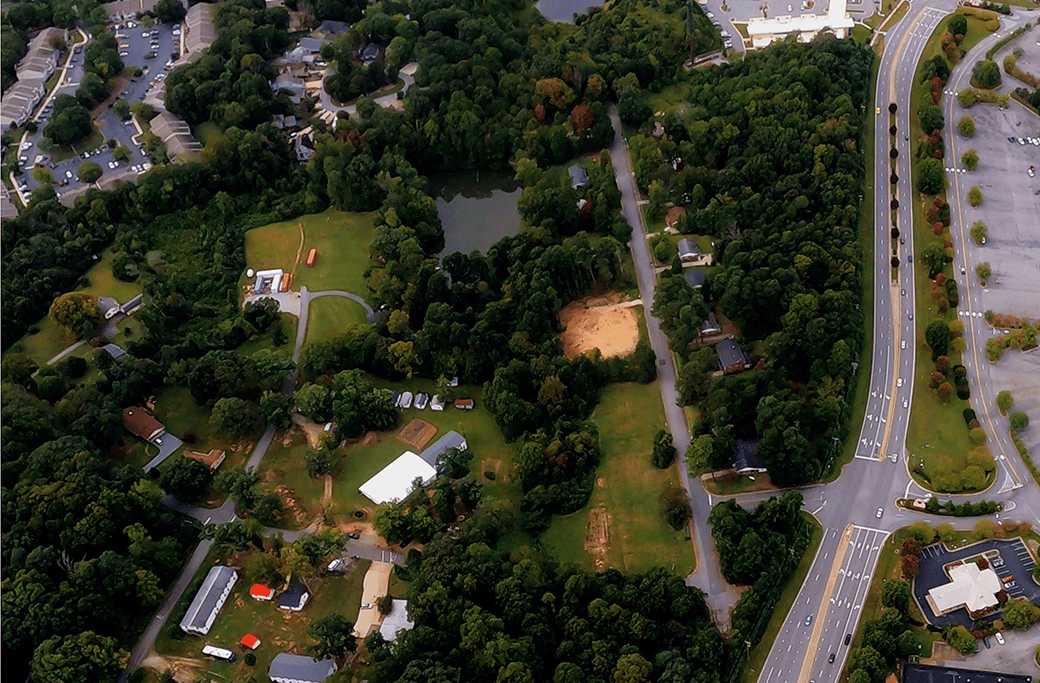
An aerial view of Moffitt Heights beside Johnson Street and the former Oak Hollow Mall property in north High Point.
Located immediately west of the former Oak Hollow Mall property, Moffitt Heights is an established residential area near Johnson Street, East Hartley Drive and the Eastchester Drive corridor. The neighborhood primarily contains smaller, mid-20th-century homes on established streets, while nearby Northbridge adds a townhome option.
The location provides convenient access to shopping, restaurants, Oak Hollow Lake, High Point University, and major roads through North High Point. Buyers should also consider traffic along Johnson Street and Eastchester Drive and follow any future plans for the former mall property, since redevelopment could change the surrounding area.
Other High Point Areas to Explore
The neighborhoods above are a starting point, not a complete list.
High Point includes many established communities, newer developments and residential areas near the city’s boundaries. Buyers may also encounter neighborhood names that are used differently by residents, real estate websites, subdivisions and mapping services.
That makes the actual address especially important. Confirm:
-
- The municipal and county jurisdiction
- Assigned public schools directly with the applicable school system
- Utility providers
- Property taxes and assessments
- HOA membership
- Emergency-service jurisdiction
- Zoning and nearby planned development
Do not rely exclusively on a listing portal or neighborhood label for these details.
How Should You Choose a High Point Neighborhood?
A useful first step is to separate your wants from your needs and rank four factors:
Price. Location. Size. Condition.
These priorities frequently compete.
A renovated home in your preferred location may offer less space than a property farther away. An older home may have more character, but require more maintenance. A newer house may provide a modern floor plan, but come with HOA rules or a longer drive to your routine destinations.
There is no universally correct ranking. The goal is to decide which compromises you are comfortable making before an individual house influences the decision.
Before narrowing your neighborhood search, determine how much home fits comfortably within your budget.
Compare Your Actual Commute
Do not judge a location solely by the number of miles shown on a map. Drive from the neighborhood to the places you visit regularly, including:
-
-
- Work
- School or childcare
- Grocery stores
- Healthcare
- Family or friends
- Parks and recreation
- Major roads you use frequently
-
When possible, make the drive at the same time you would normally travel.
Compare Home Age and Condition
High Point contains homes from many different periods. Home age can affect layout, energy efficiency, maintenance requirements and the systems you should inspect.
An older home may have been substantially renovated, or may still contain older electrical, plumbing, roofing or drainage components. Newer construction may have different maintenance considerations, warranties or association requirements.
Once you identify a property you like, learn what to expect from the home-inspection process, before deciding how its condition affects your offer.
Evaluate the condition of the individual property, rather than assuming that every home of a particular age will have the same advantages or problems.
Review the Property’s Immediate Surroundings
The neighborhood name provides only part of the picture. Before making an offer, investigate what surrounds the specific home. Look for:
-
-
- Busy roads and intersections
- Commercial or industrial property
- Railroad lines
- Undeveloped parcels
- Drainage features or flood-prone land
- Existing construction
- Proposed road or development projects
- Differences in elevation between the home and surrounding properties
-
Visit the street at more than one time of day when practical.
Verify Schools by Address
School assignments can change and may differ between homes that appear to be in the same general neighborhood.
If public-school assignment matters to your decision, verify the specific address with the appropriate school system. Do not rely solely on a real estate listing, map pin or third-party school website.
You should also make your own assessment of whether a school meets your household’s educational needs.
What Are the Best Neighborhoods in High Point?
There is no single best neighborhood for every High Point buyer.
A buyer prioritizing historic architecture may develop a different shortlist from someone who wants newer construction, a golf-course community, a particular commute or a larger lot. Budget, home condition, and available inventory will also affect the decision.
A current mortgage preapproval can also help you focus on homes and neighborhoods that fit your likely purchasing range.
The best approach is to:
-
- Establish your price range.
- Rank price, location, size and condition.
- Identify several areas that could meet those priorities.
- Visit the neighborhoods at different times.
- Compare individual properties and streets.
- Investigate the home and location during due diligence.
This process produces a more useful answer than relying on a generic neighborhood ranking.
Moving to High Point?
If you are relocating, neighborhood selection is only one part of the decision.
Our Living in High Point, NC: Complete Relocation Guide provides a broader look at housing, location, commuting, recreation and everyday life in High Point.
Use the two resources together:
Understand High Point → Compare neighborhoods → Explore available homes → Investigate the property and location.
Find the Right High Point Home
The Ginther Group helps High Point buyers clarify what they need, compare neighborhoods, evaluate individual homes and navigate the buying process from the initial search through closing.
Tell us how you rank price, location, size and condition, and we can help you identify High Point homes and neighborhoods that fit those priorities.
View High Point homes for sale or contact The Ginther Group to begin your search.


